

— Our story
Six centuries at the heart of Begnins.
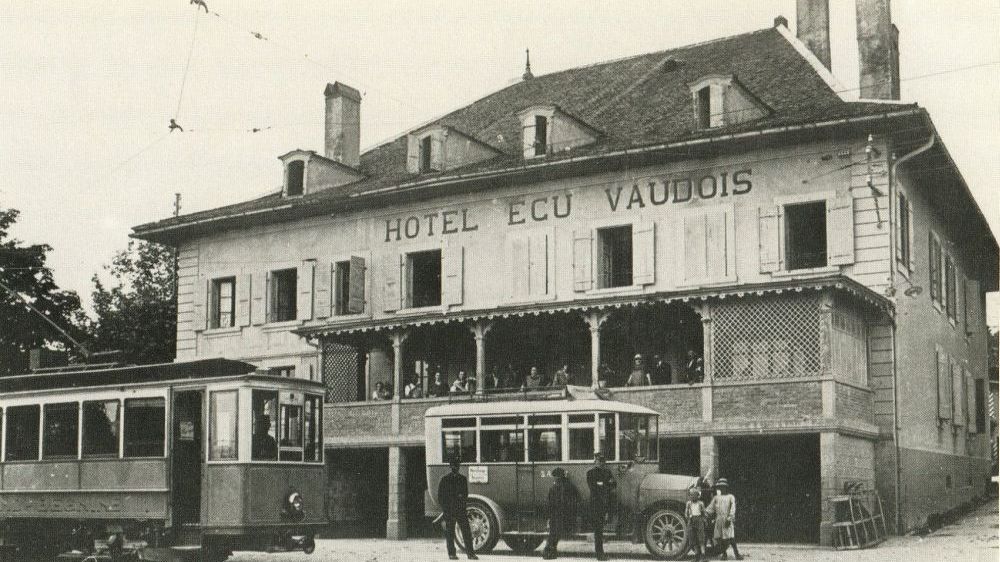
At the village's central crossroads, in the shade of its great chestnut tree, the Écu Vaudois is a silent witness to the history of La Côte. While the façade we admire is firmly 18th-century, the roots of the house run far deeper.
The chronology of the house
Around 1400
The medieval foundations
The earliest parts of the building rise as an important seigneurial residence. The splendid vaults and the mighty timber framing, still preserved today, reflect the centuries-old Vaud building tradition.
Around 1750
The period interiors
The first-floor chimney mantel, of absolute authenticity, is recorded and protected by the cantonal heritage documents.
1780 – 1790
The classical transformation
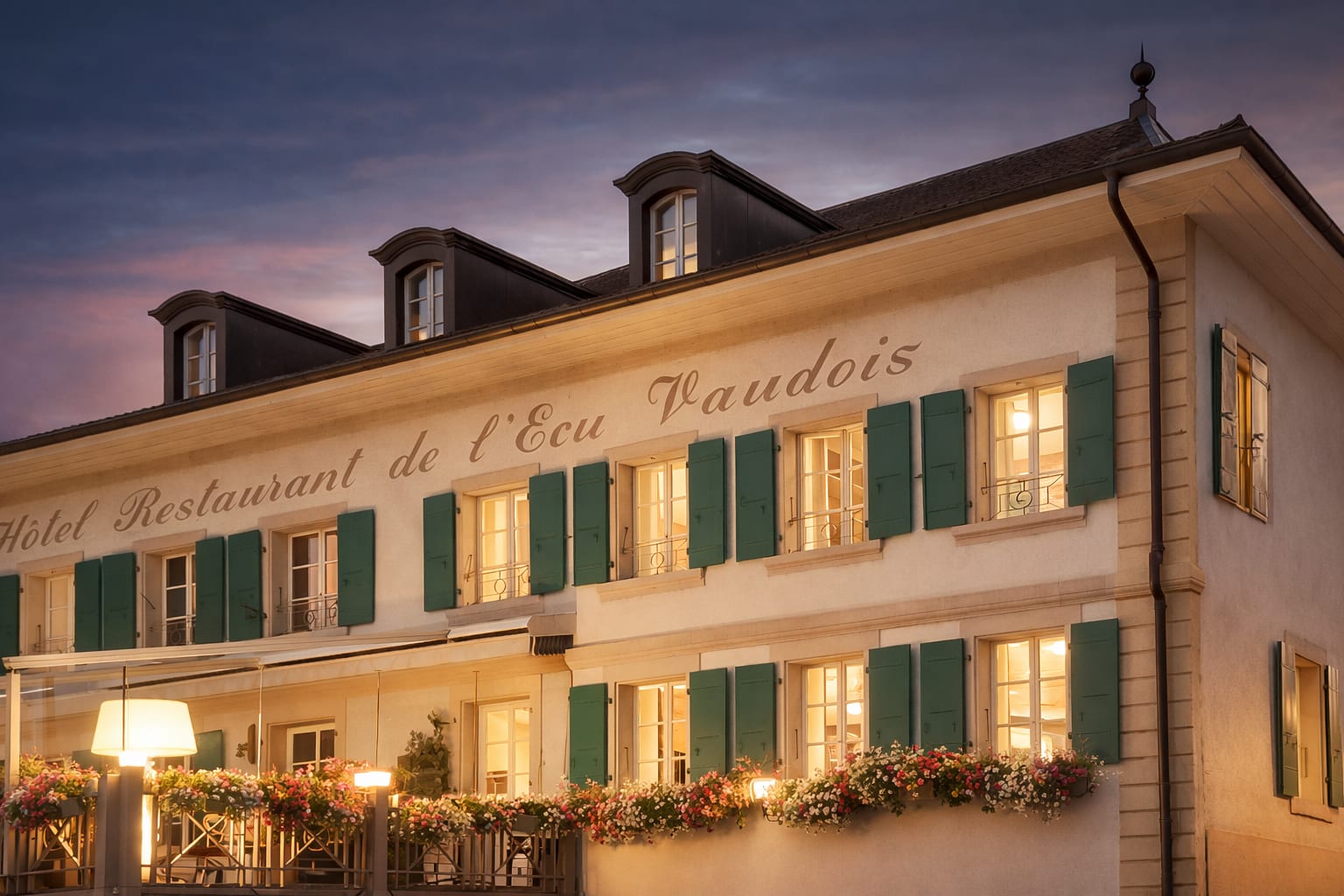
The building takes on the elegant neo-classical character it keeps today: a large regular façade with symmetrical windows, an imposing hipped roof punctuated by graceful dormers.
1791 – 1910
The golden age of fairs
Begnins becomes a commercial hub thanks to its great regional fairs. The Café and Inn of the Écu Vaudois, on the stagecoach route to Geneva, becomes the travellers' resting point.
2020 – 2021
The restoration
After centuries as a communal inn, the house undergoes a thorough renovation that blends historic elements — the wooden gallery, the old parquet — with the comfort of a boutique hotel and its restaurant.
Today
A living house
Its famous gallery of wood, beams and history — up to 90 guests — carries on the tradition born four centuries ago, the stage for the village's finest moments.
What does "Écu Vaudois" mean?
The Écu
An old and prestigious gold or silver coin, used from the Middle Ages across French-speaking lands. Giving this name to an inn meant presenting it as a place of prestige, trade and safe exchange.
Vaudois
A tribute to the pride of the canton of Vaud, which, between the late 18th century and the 1803 Act of Mediation, lived its greatest transformations towards cantonal independence.
Protected heritage
The Écu Vaudois is officially listed in the ISOS, the Federal Inventory of Swiss Heritage Sites. Together with its square, it is an irreplaceable element for reading the history of the old village of Begnins.